Journalism of Courage

In Q1 FY26, Ventive reported Rs 520 crore in revenue, up 18 percent year on year. Of this, hotels brought in Rs 386 crore while the rental business added Rs 124 crore. The real highlight was operating profit: EBITDA was Rs 220 crore, with margins at 42 percent. The question now is whether this premium pricing in the market reflects a business already delivering, or one that still needs to prove it can scale without losing its shine.

In Q1 FY26, Happiest Minds Technologies posted revenue of Rs 579.9 crore, up 18.5% year-on-year, with net profit rising 12% to Rs 57.1 crore. The company has been investing aggressively in cloud, automation, cybersecurity, and now Generative AI, while strengthening its presence in BFSI and healthcare. For long-term investors, the question remains: is the market rewarding this foresight, or already pricing it all in?

In Q1 FY26, Chalet Hotels’ revenues surged 146 percent to Rs 908 crore, with EBITDA up 150 percent to Rs 371 crore. Average daily rate rose 17 percent to Rs 12,207, while occupancy slipped to 66 percent. For retail investors, the stock offers exposure to India’s hospitality upcycle, with double-digit ADR growth and rising RevPARs. But the key question is: can the momentum last?

With auto sales flat in Europe, India’s automotive market is rebounding. Bosch India hit a new high of Rs 41,945 as changing regulatory norms and electrification create opportunities for domestic-focused auto ancillaries. While its fundamentals are solid, the key question is how effectively it can seize India’s electrification opportunity and expand market share.

Unimech Aerospace, a niche MRO tools and precision parts maker, is riding India’s aerospace surge. The stock currently trades at a trailing twelve-monthP/E multiple of 65x, highlighting strong growth expectations. Yet, the question remains: Is Unimech Aero another aerospace-and-defence hype story, or does it truly warrant a rich premium?

Apollo Micro Systems started its defence sector rally in 2023 and has outperformed its PSU peers. The momentum has been fuelled by innovations moving into large-scale production and order inflow. But with the stock now trading at a 149x PE ratio, the question is: has it peaked or is this the first stage of its growth journey?

In Q1 FY26, Pidilite’s consolidated revenue rose 10.6 percent year-on-year, EBITDA grew 15.8 percent, and net profit increased by 18.7 percent. While the double-digit growth is impressive, the key question for investors is: can it keep compounding at a pace that justifies 70 times earnings?

Aditya Birla Fashion & Retail Ltd has built India’s most diverse fashion portfolio — from Pantaloons and Van Heusen to Sabyasachi and Tasva — but its stock still hasn’t rewarded long-term investors. The question is: is ABFRL building a fashion powerhouse or just juggling too many brands to deliver real returns?

Phoenix Mills is doubling down on India’s retail revival. From crowded atriums and premium tenants to a Rs 5,449 crore buyout of its partner’s stake in marquee malls, the country’s largest mall operator is reshaping its portfolio for long-term gains. But while footfalls and spending are surging, rental income growth remains modest. The question for investors is whether Phoenix can balance growth with debt and turn today’s shopping boom into lasting profits.

A 50% US tariff has rattled Indian textile exporters, but upcoming UK and EU trade deals could present an opportunity. Gokaldas Exports is betting on diversification and cost control to stay resilient.

In Q1 FY26, Wonderla Holidays’ average revenue per user rose 6% to Rs 1,775, revenue dipped 3% to Rs 169 crore, and net profit moderated to Rs 52.6 crore. Beyond the numbers, the company is reshaping itself into a broader leisure brand with premium resorts like The Isle in Bengaluru and a Rs 600 crore Chennai park slated for 2025, signalling long-term growth ambitions despite near-term cost pressures.

Apar Industries grew into a Rs 31,000 crore power giant with 90% stock CAGR. Now, with high valuations and modest growth ahead, investors must weigh risks versus rewards.

In the June 2025 quarter, Jio Financial Services’ consolidated income rose 48 percent YoY to Rs 619 crore, and the lending arm has expanded its AUM to Rs 11,665 crore from Rs 217 crore a year ago. Yet, the stock price has not matched the pace of expansion. This raises the question: is Jio Financial an investment worth exploring at this stage?

In Q1 FY2026, Tata Consumer’s revenues grew 10% to Rs 4,779 crore, but the EBITDA margin slipped to 12.9% from 15.4% a year ago. For investors, the key question is whether the stock, already trading at rich valuations, still has meaningful upside.

In the last three years, Aarti Industries’ stock has fallen nearly 60% as Chinese oversupply eroded margins and heavy capex dragged returns. With raw materials bottoming, a Rs 1,800 crore EBITDA target, and Zone-4 ramp-up underway, is a turnaround possible?
In Q1 FY26, Emami’s gross margin stood at nearly 70 percent, among the highest in the FMCG space, and net profit increased by 9% to Rs 164 crore. Yet, Emami’s stock has spent much of the last ten years moving sideways. As the company celebrates fifty years of brand building, will the next decade be different for its shareholders?

Godrej Properties’ business fundamentals remain strong. In Q1 FY26, the company delivered its highest-ever quarterly net profit of Rs 600 crore, EBITDA of Rs 915 crore, and collections stood at Rs 3,670 crore, a 22 percent rise from a year ago. Yet the flat share price raises questions: is the growth pace slowing, is the premium valuation already pricing in the next few years, or is the broader housing cycle entering a more balanced phase?
Metro Brands’ stock is currently trading in the range of Rs 1,150-1,200. The company has maintained gross margins near 60 percent while introducing new brands, adding store formats, and expanding into smaller cities and towns. The question now is: can it continue to deliver growth in the years ahead?
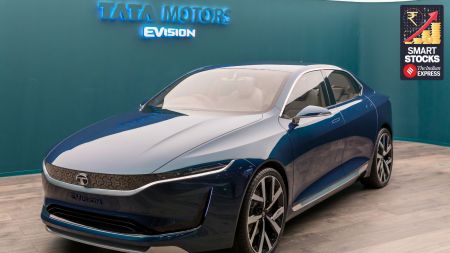
Tata Motors’ stock has lagged its peers as the company prepares for a demerger and an acquisition in FY26. The planned purchase of Iveco mirrors Tata’s familiar strategy of acquiring assets in a declining market. The key question is whether the demerger can unlock shareholder value and steer both the passenger and commercial vehicle businesses toward a successful Turnaround 2.0.

Polycab’s stock is currently trading at Rs 7,000, an eight-fold jump in five years. In Q1 FY26, the company reported Rs 5,906 crore in revenue, up 26% YoY. The wires & cables division brought in around Rs 5,130 crore or about 87% of total sales, growing a strong 31% YoY. For investors, the question now is whether the next phase can match or even exceed the voltage of its past run.

With over Rs 4,000 crore in fresh capital, major debt settlements, and plans to double its fleet by year-end, SpiceJet is positioning itself to ride India’s air travel rebound. Yet, persistent operating losses and delayed fleet additions leave one question unanswered: can it engineer another turnaround?

In 2025, Nippon Life India Asset Management's stock price crossed Rs 800. The company’s revenue from operations stood at Rs 606.6 crore, up 20% YoY from Rs 505 crore in Q1 FY25, and it reported a PAT of Rs 396.1 crore. The question now is: is the real growth phase for NAM India only just beginning?

Five years ago, 360 ONE WAM was a little-known wealth firm trading at Rs 200. Today, it manages over Rs 6.6 lakh crore, serves 8,000+ clients, and has posted record profits. After a 6x stock surge, investors are asking: is this the beginning or the peak?

After a decade of balance sheet struggles, Schneider Electric Infrastructure has delivered multibagger returns, supported by four consecutive years of profits. But can it sustain strong order inflows and extend its rally, riding on India’s AI-driven infrastructure boom?

In Q1 FY26, Anand Rathi Wealth posted a 28% jump in net profit to Rs 94 crore. Its revenue grew 16% year-on-year to Rs 284 crore, and AUM crossed Rs 87,000 crore. So what is driving this business, and is it worth tracking closely?